Cattedrale Santa Maria Assunta
Heritage & Culture
Volterra, Pisa | Italy
2019
Architectural Design
Giorgio Bascià
Lighting Design
Arch. Massimo Iarussi
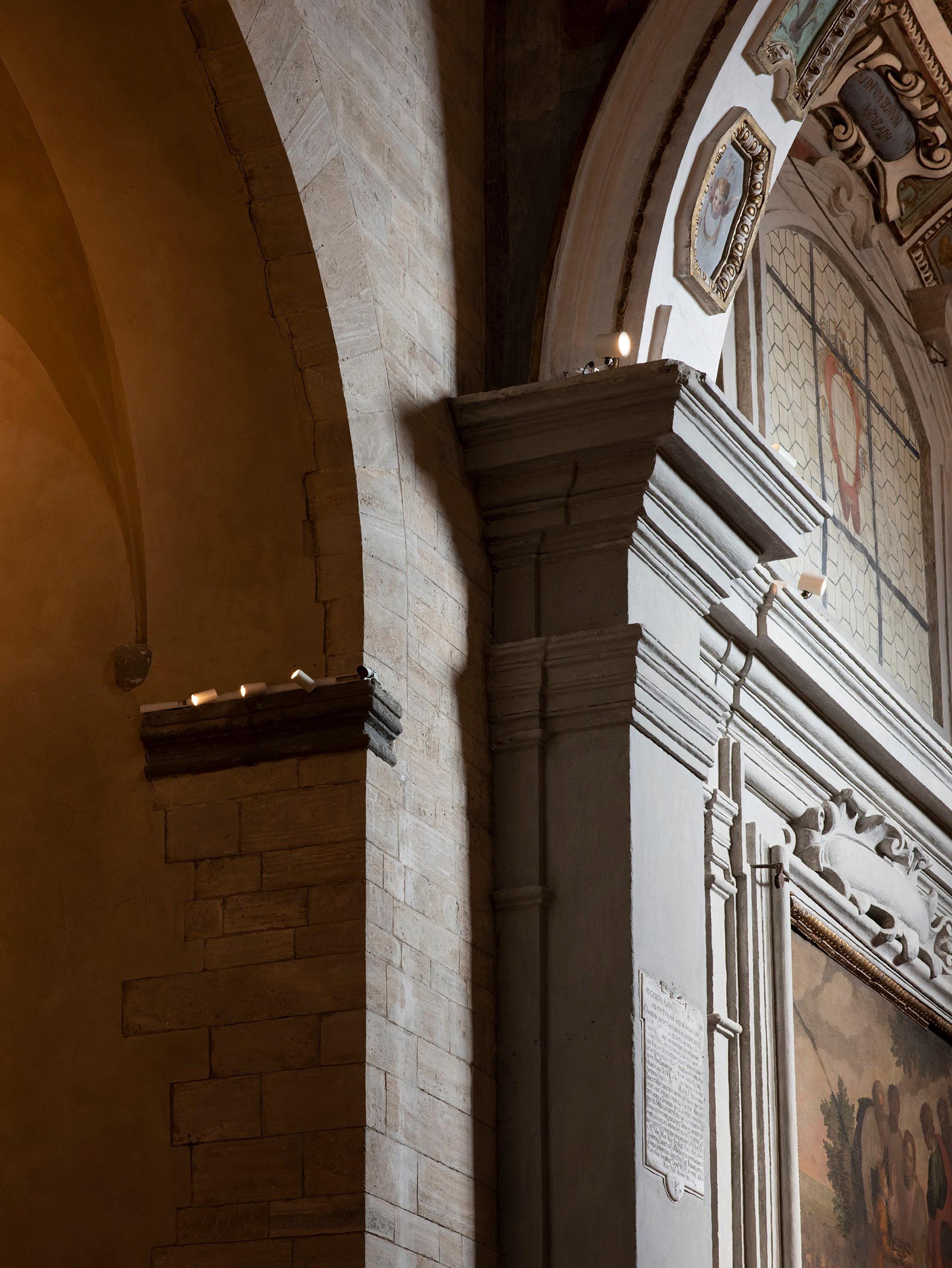
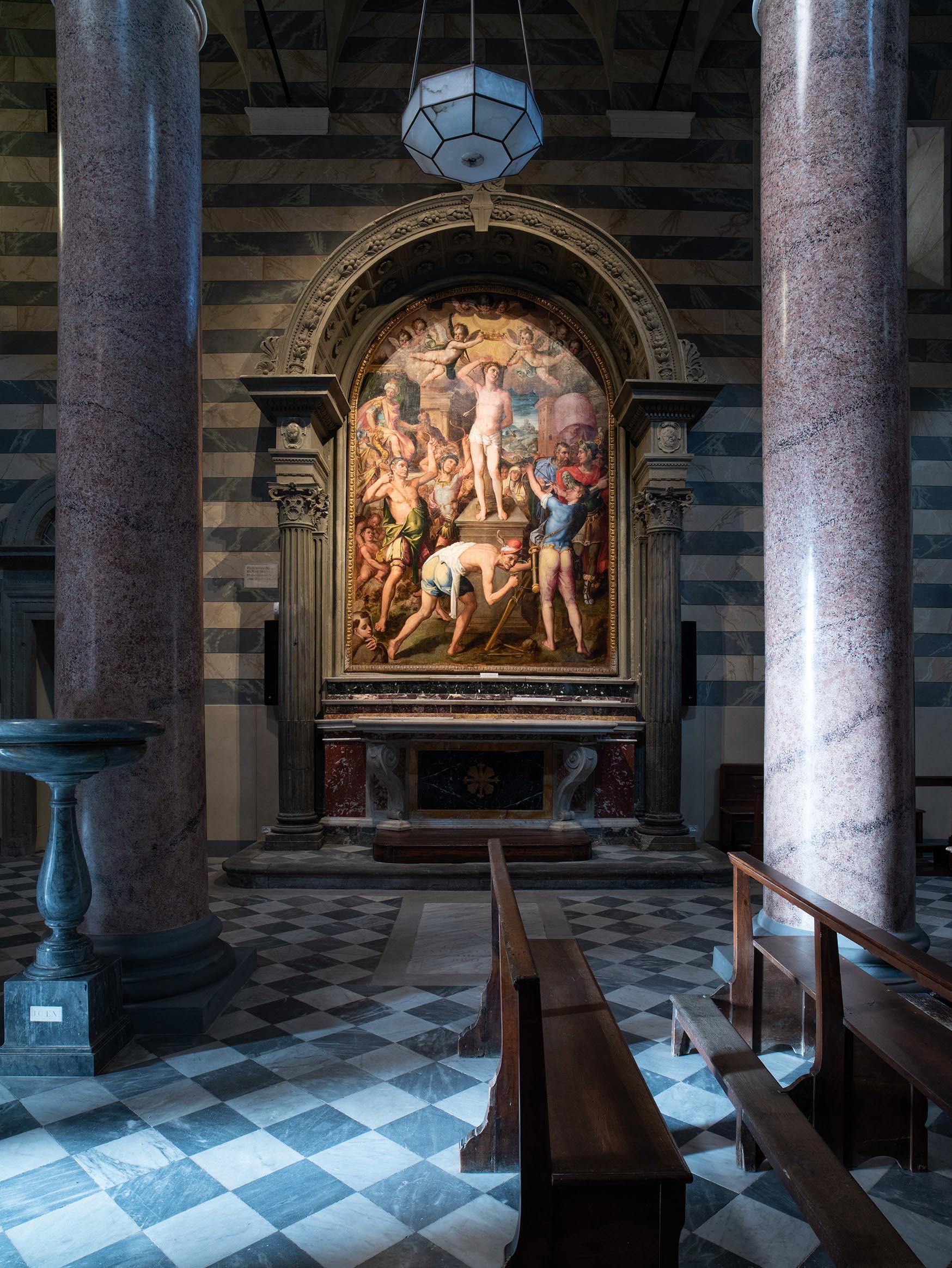
Volterra is the city of alabaster, well-known and visited by discerning tourists looking for less-known artistic treasures but of great historical-artistic value. The cathedral of Santa Maria Assunta is one of these places, the symbol of medieval Volterra and one of the finest examples of Pisan Romanesque architecture. Consecrated in 1120, the cathedral is home to both precious antique and modern works of art. In 2016 to mark the 900th anniversary of its consecration the diocese in Volterra decided to start restoration work on the whole church, both architectural and structural work including the lighting system. The lighting project was entrusted to the architect and lighting designer Massimo Iarussi given his particular talent and experience in the historical-artistic field. The project is once again in-keeping with the concept of “light that remains in the background”, as Iarussi likes to define it where light does not intend to take centre stage, be self-referential and an end in itself, but appears to be rather "organic" to the space that surrounds it; perceived as intrinsic in the space. Visitors can enjoy the entire space and not specifically its light.
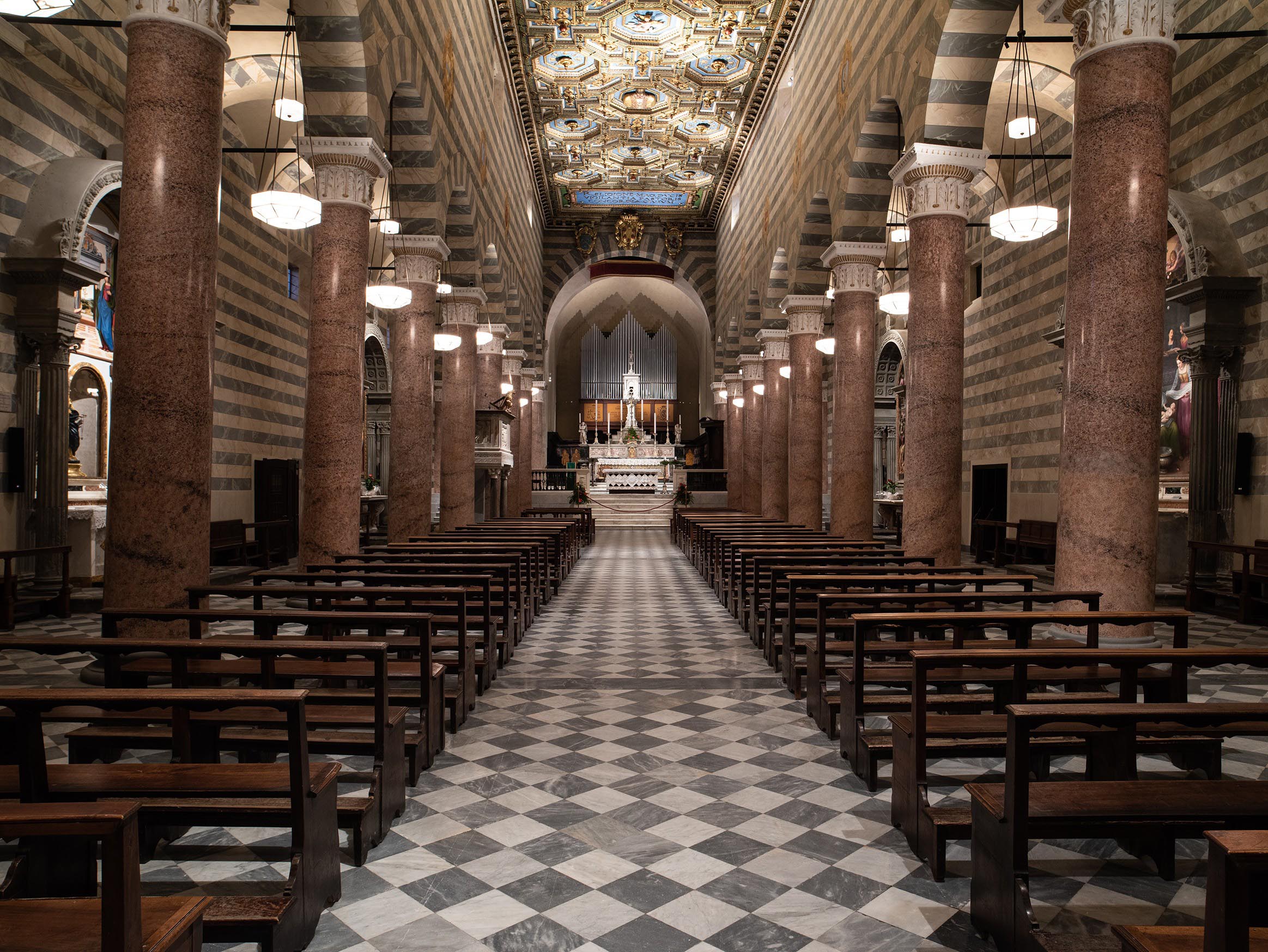
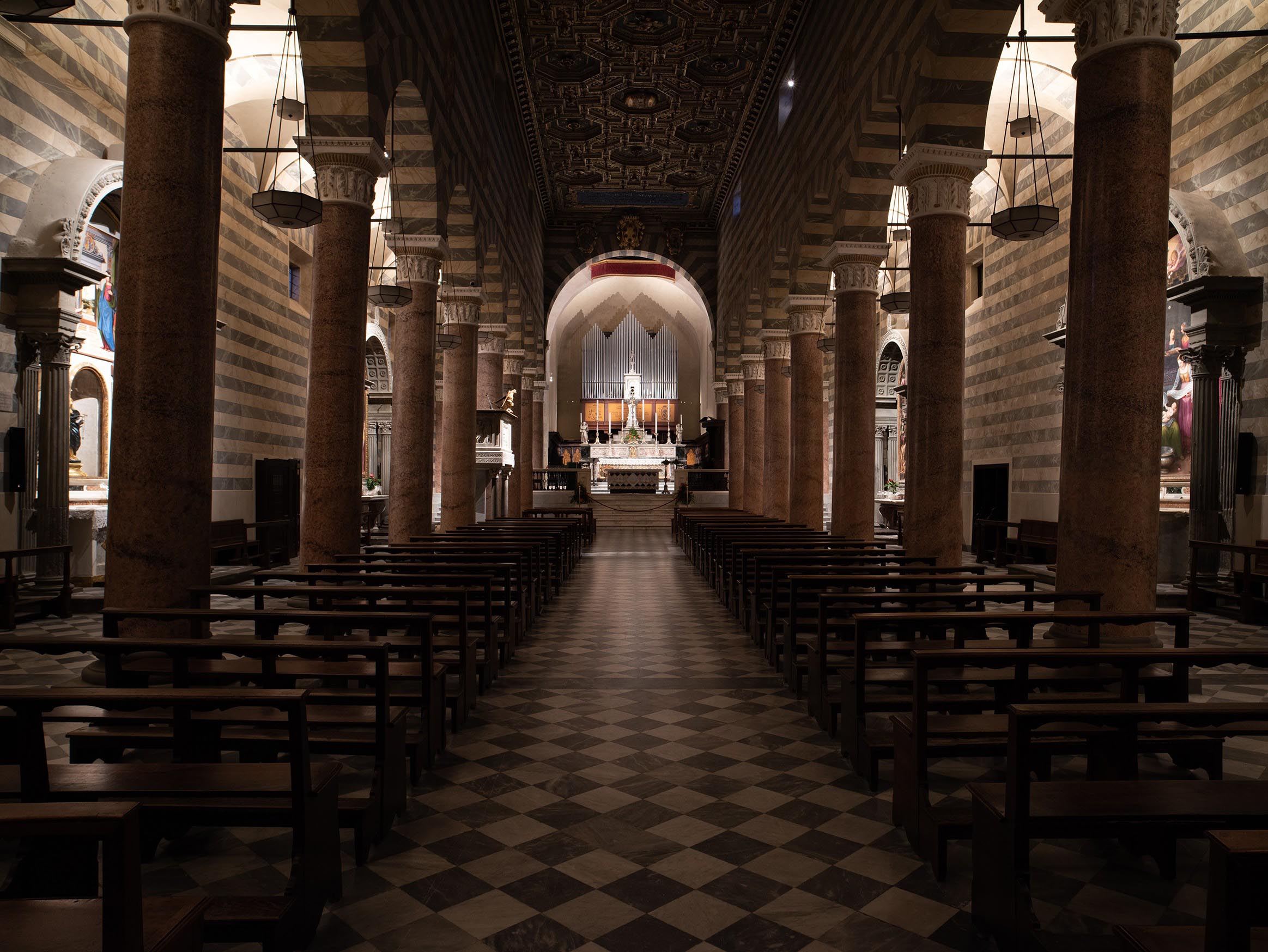
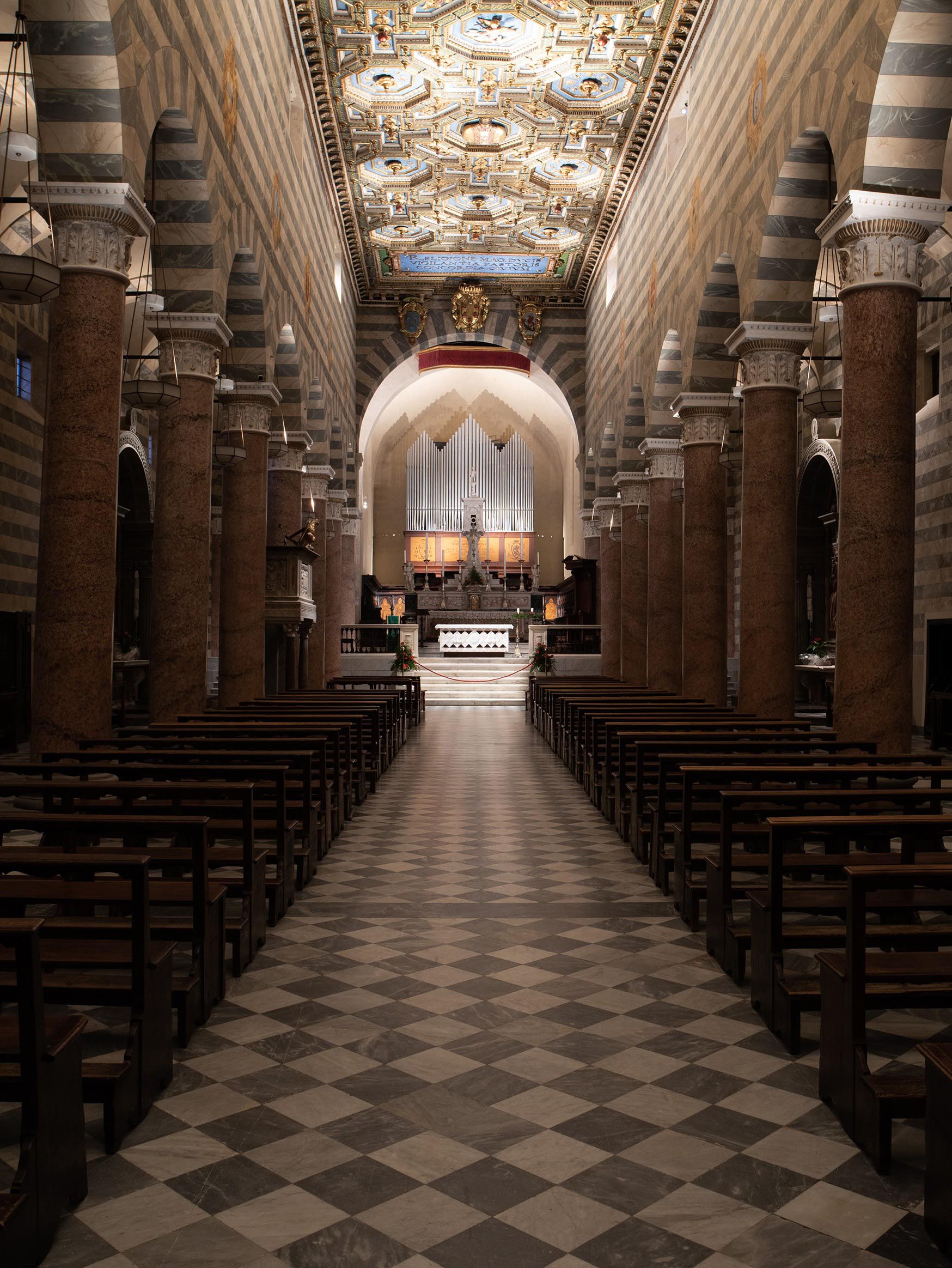
The central nave
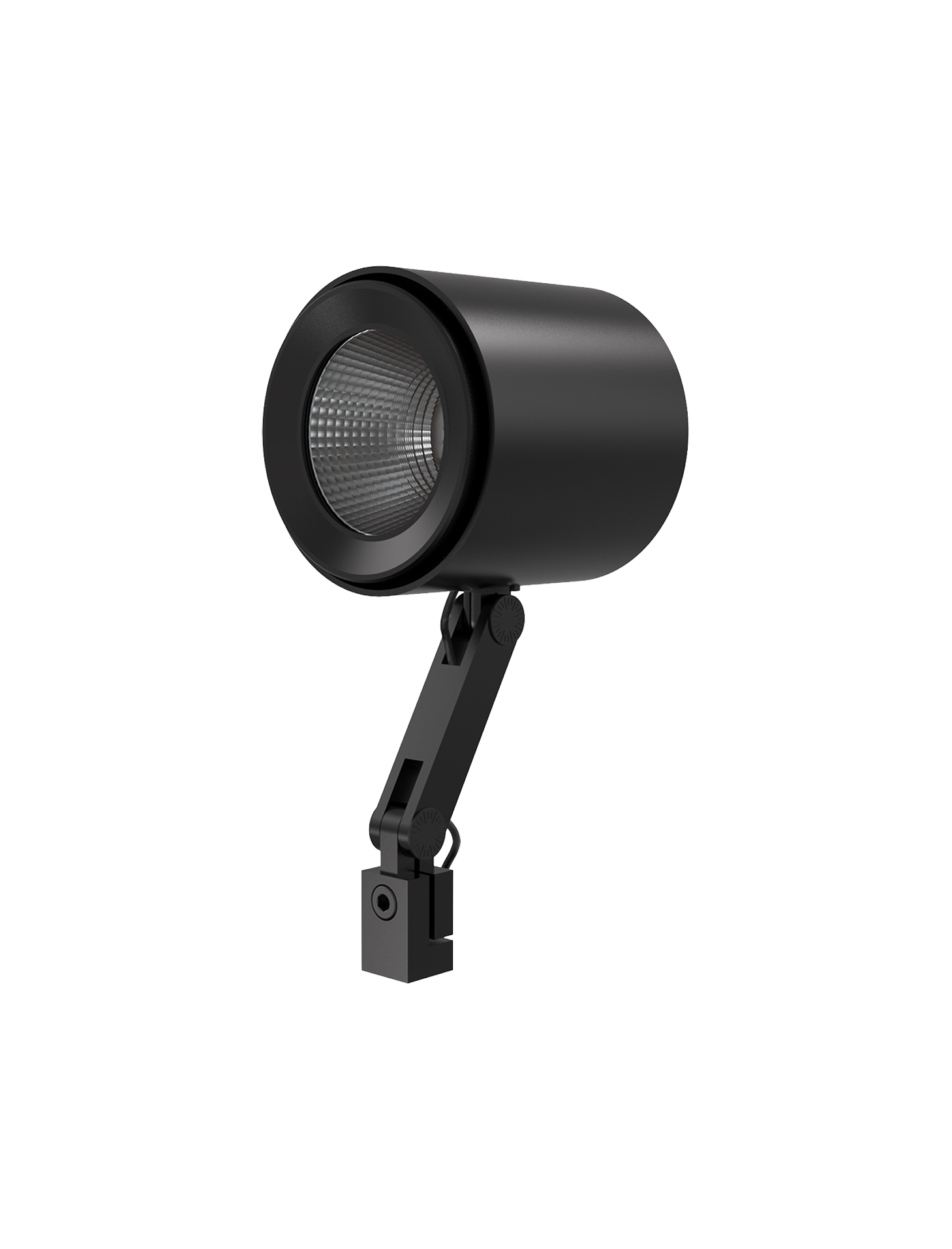
With the same aim the architect decided to design particular suspension fixtures made of alabaster for diffused lighting in the church and to hide the projectors that light the coffered ceiling. This idea was dictated by the already present overlapping of elements and styles from different eras inside the church, which make it a work of inestimable artistic value. The space, while retaining the Latin-cross basilica shape with three naves also has a late Renaissance aspect. The coffered ceiling dates back to the late sixteenth century while the stucco coating on the columns, the floor and the walls painted in white and grey bands all date back to restoration work carried out the nineteenth century. The suspension fixtures therefore add a new element to the Cathedral, an expression of artistic and artisan work from the third millennium. The entire project has a common theme of softness of light and perfect balance of luminance between the various areas of the church. Everywhere architectural details have been used to install fixtures and hide them as much as possible from view, except for the lanterns that also become important decorative elements. The central nave is lit with diffused light from the new alabaster lanterns positioned below the arches that divide the naves. This is a tribute that the lighting designer wanted to pay to the city, the European capital for processing this precious mineral. The lanterns represent the masterful work of different artisans. The artisan who worked on the alabaster, the blacksmith who made the metal structure and Targetti who designed the technological heart. The R&D department at Targetti created a kind of metal tray to house the fixtures for different lighting scenes. The lanterns play a triple role of contributing to the general lighting in the church, lighting the coffered ceiling and providing a more scenographic zenith light for the floor. A kind of ring made of LED strips surrounds the metal tray to provide a backlight for the alabaster suspension fixtures. Inside they are equipped with custom-made projectors inspired by the ZENO range, fitted with a special adjustable bracket to light the coffered ceiling. Finally, in the lower part of the lanterns there are small recessed projectors derived from the LABEL 24 V range which are fixed to the metal trays using rods which zenithally light the floor.
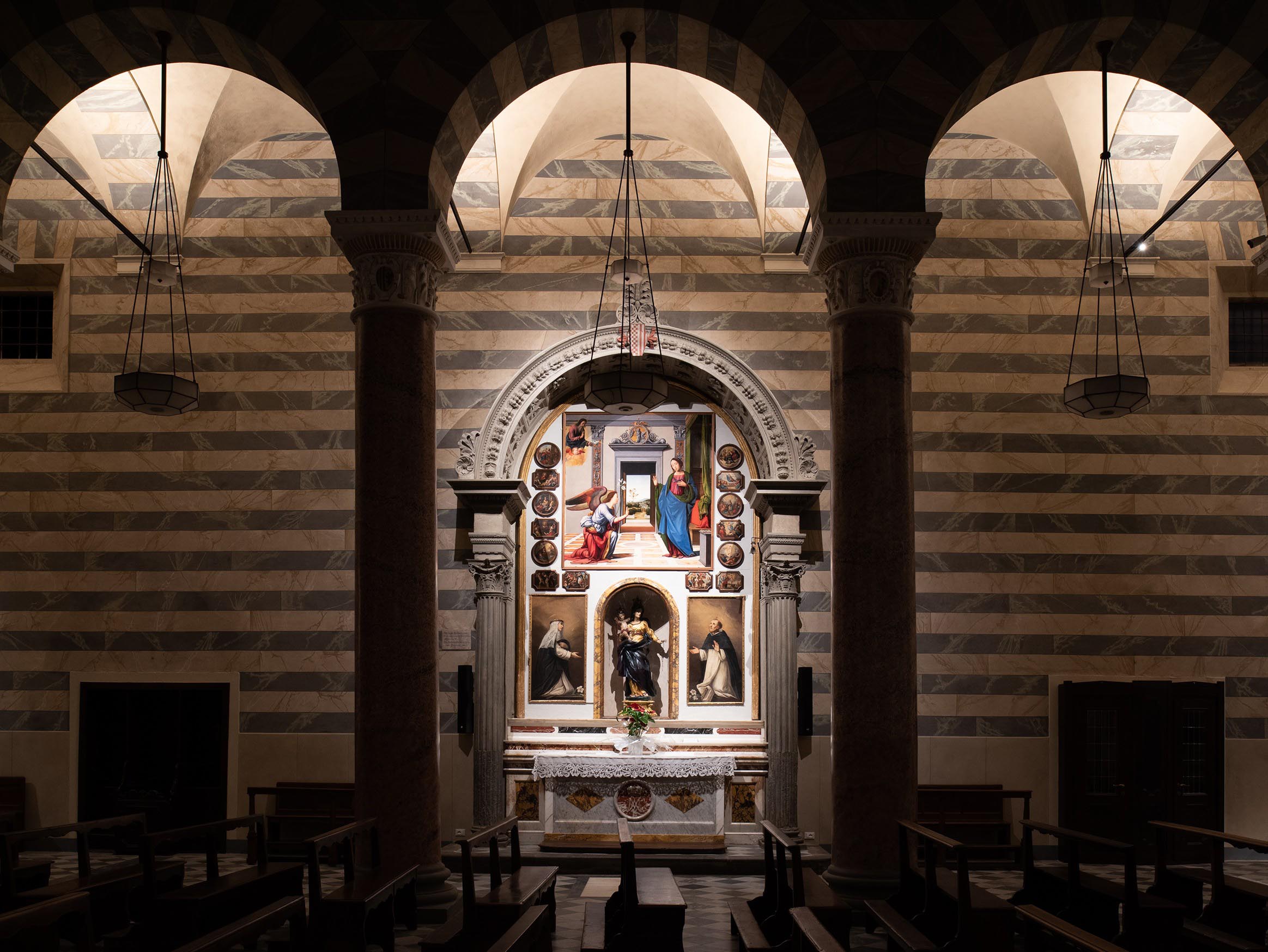
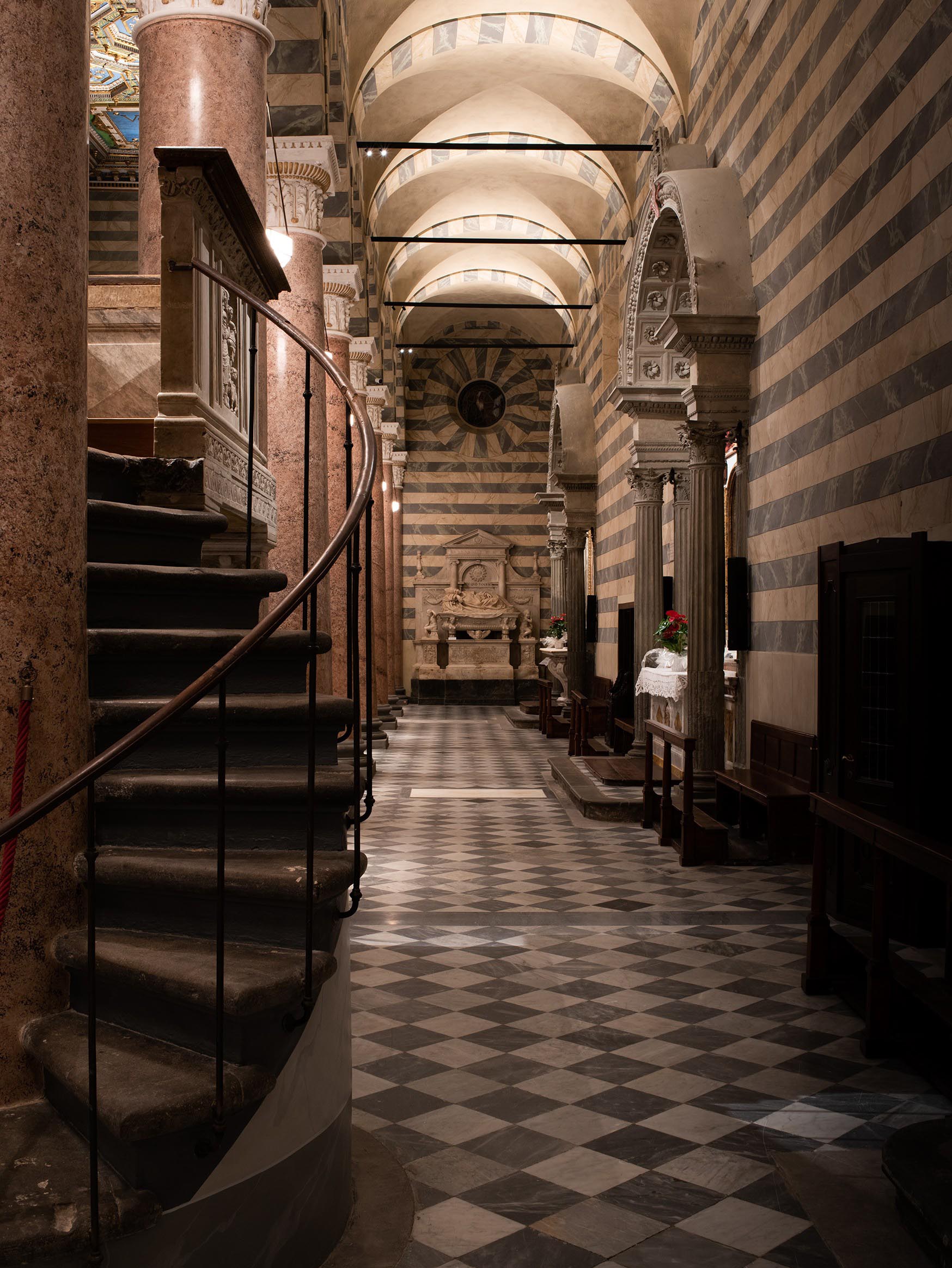
The side naves
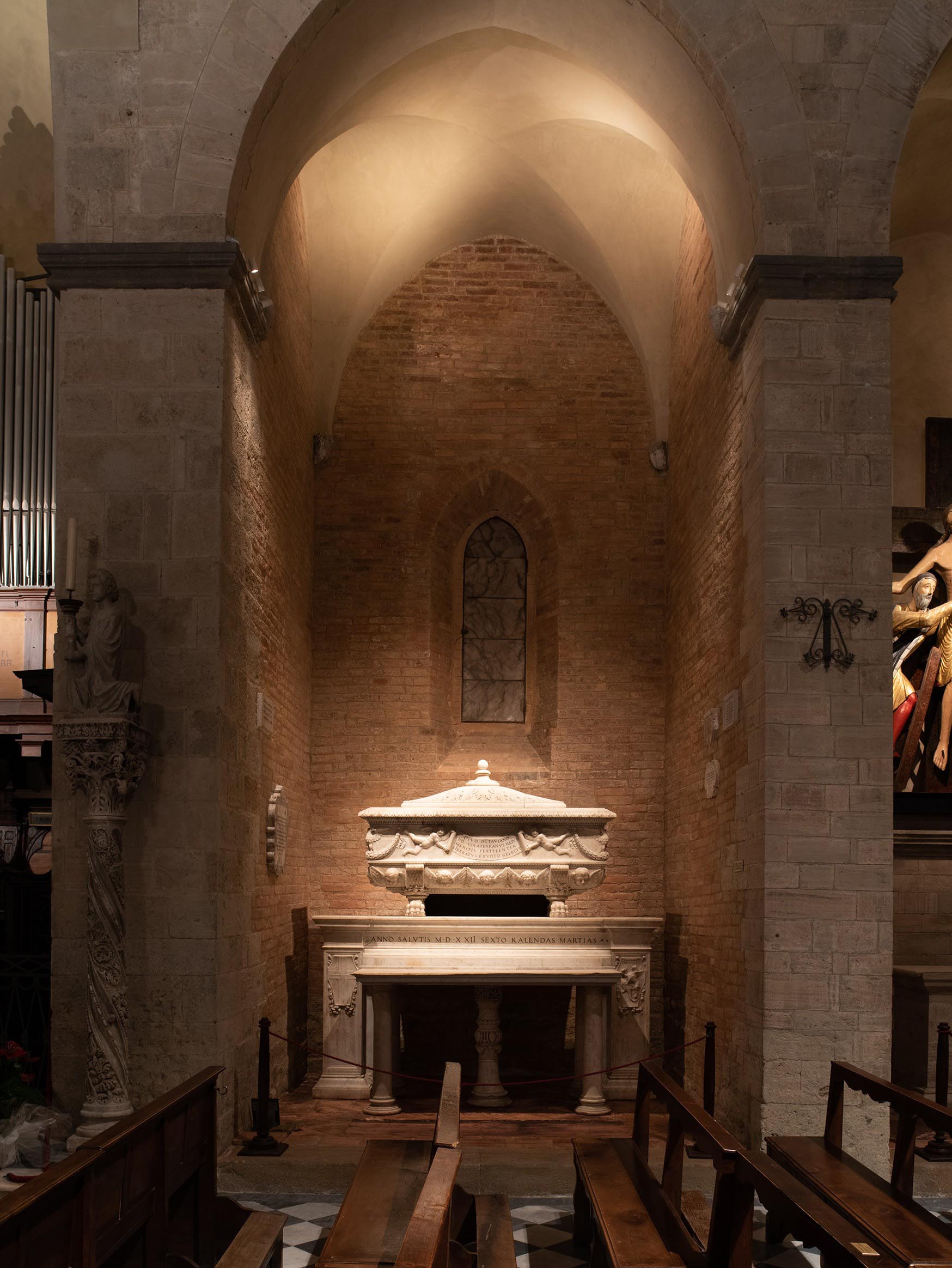
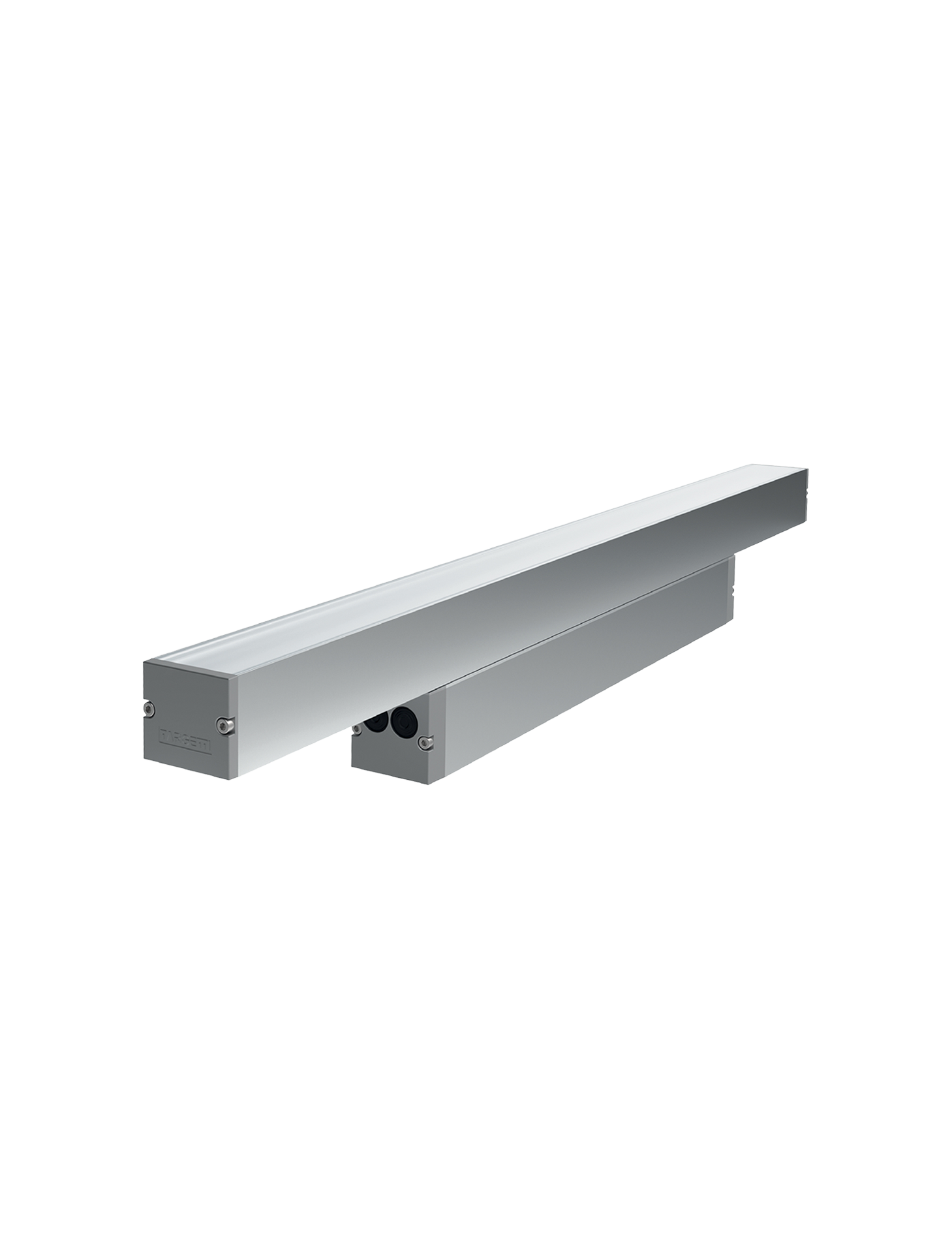
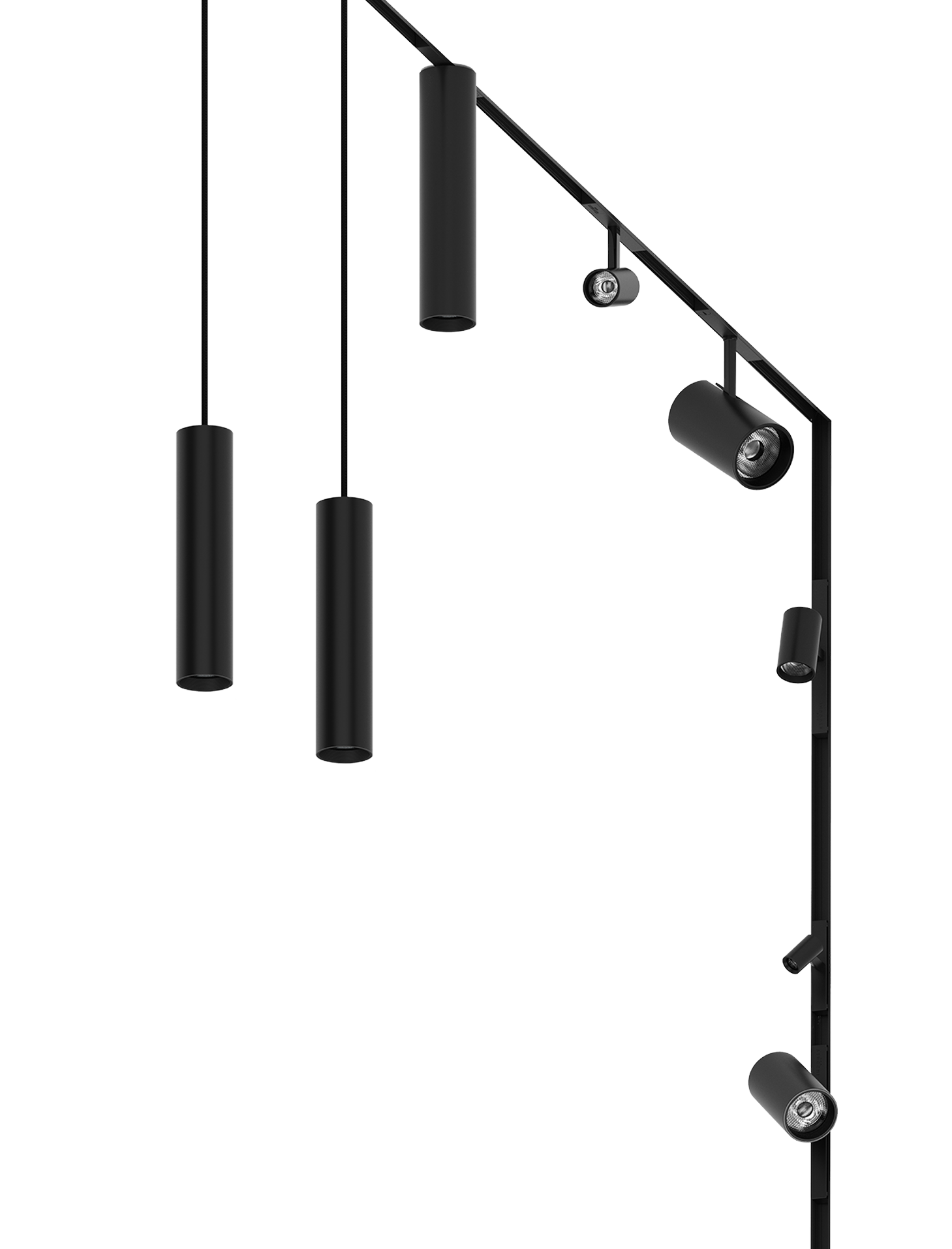
The side naves are light indirectly. A decision was made to enhance the vaulted ceiling using linear lighting positioned on the existing chains. The effect is extremely soft without any particular focus. The lighting designer studied the right power and the distances between the walls so as not to create any blurring. Black 48 V tracks to light LABEL mini projectors are also attached to the chains to light the side chapels that are filled with precious frescoes.