Uffizi Gallery
Heritage & Culture
Florence | Italy
2018
Lighting Design
Arch. Massimo Iarussi
Photo
Officine Fotografiche
Galleria delle statue e delle pitture degli Uffizi
The “Galleria delle statue e delle pitture” known as the Uffizi Gallery is one of the most important museums in the world. The building was commissioned by Cosimo I de’Medici and designed by Giorgio Vasari. Originally it was intended to be home to the “Uffizi”, the administrative and judicial offices of Florence but at the end of the sixteenth century the cultured and refined Francesco I De’Medici ordered a real gallery to be built on the second floor of the building to house the large collection of works of art of the powerful Florentine family. Today the Gallery is the most visited museum in Italy and the eighth in Europe (data from 2018). The heritage inside this museum is a real journey through Italian Medieval and Renaissance art with extraordinary works by Giotto, Piero della Francesca, Leonardo, Raffaello, Botticelli, Michelangelo and Caravaggio.
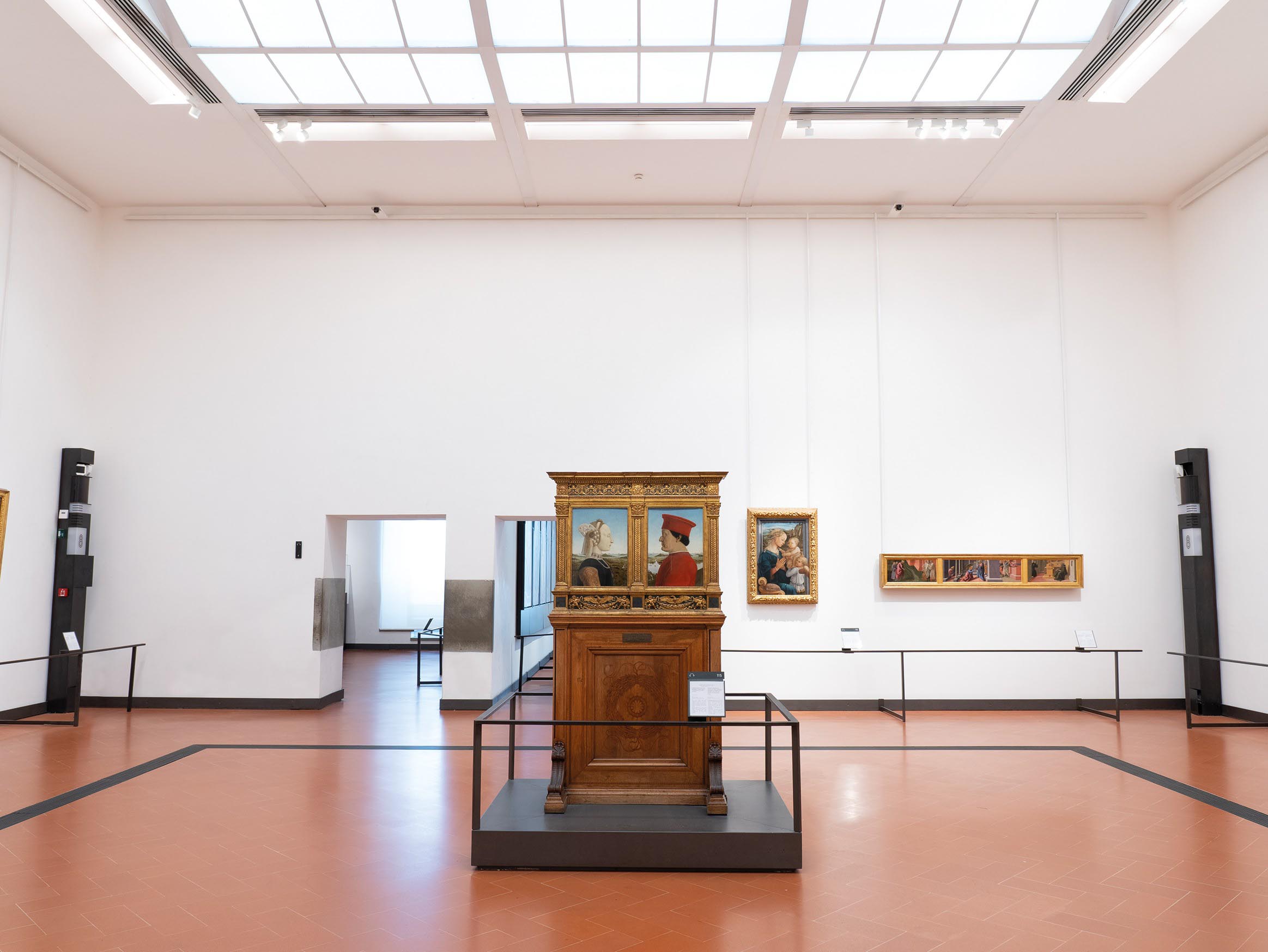
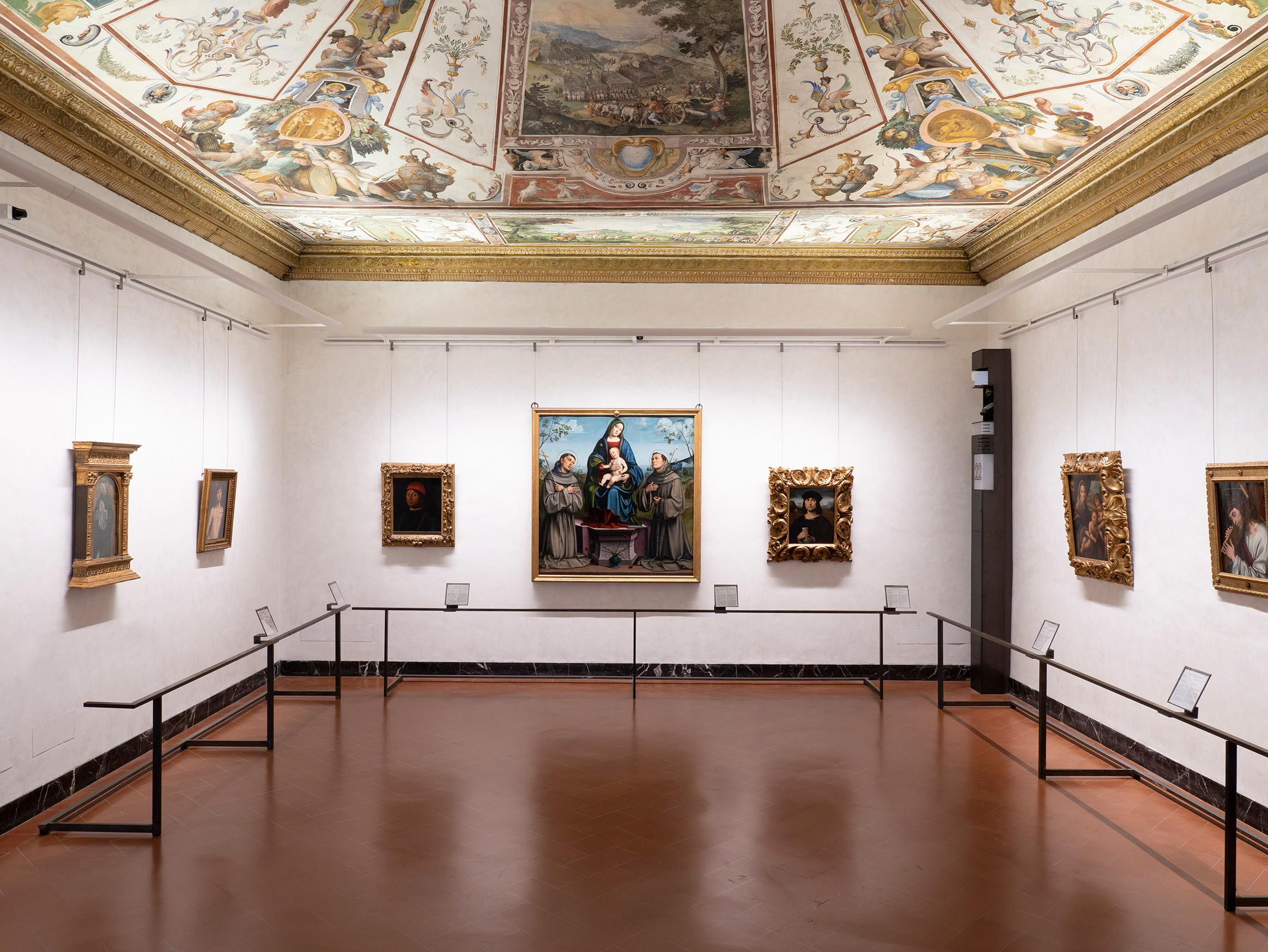
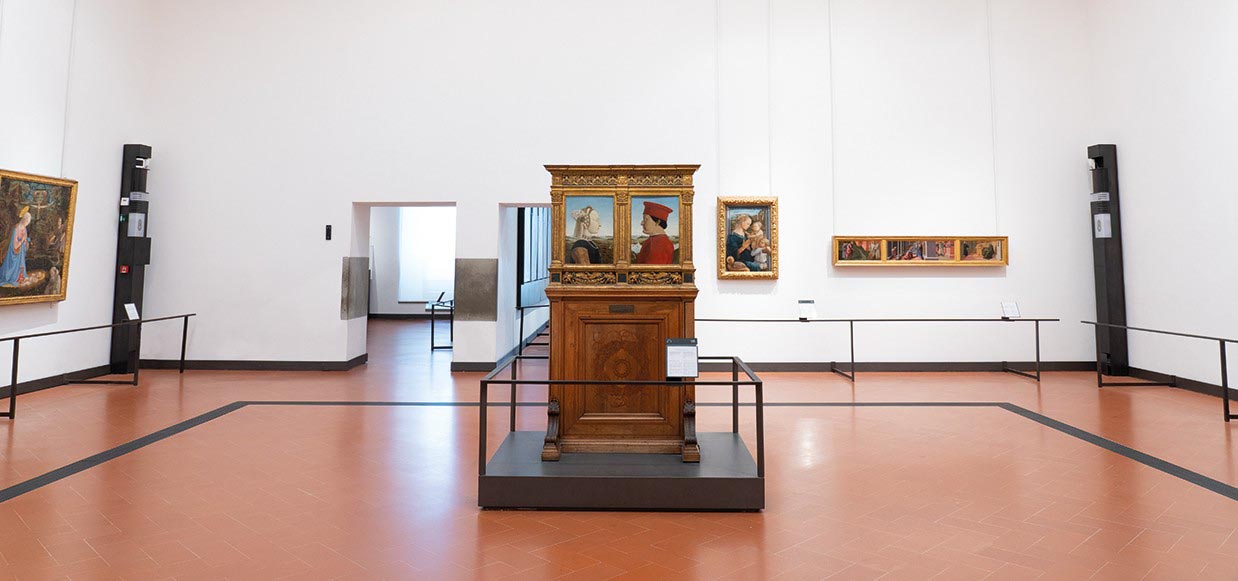
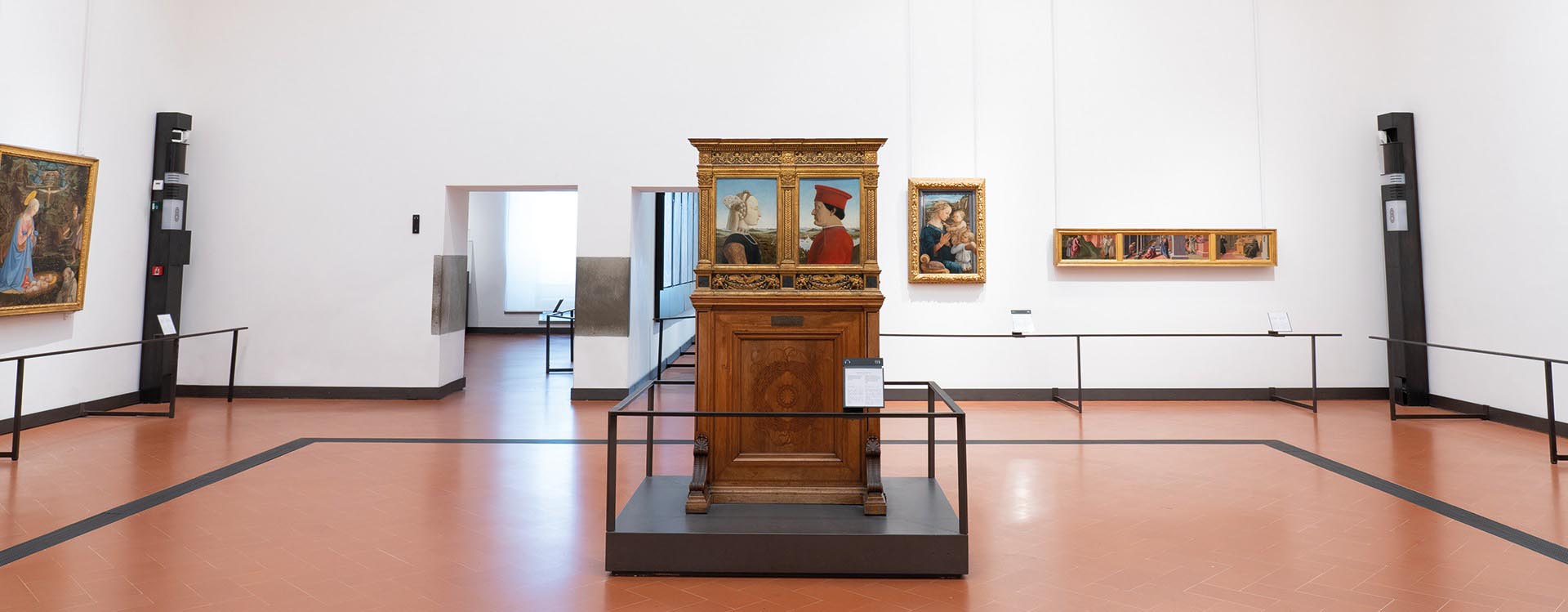
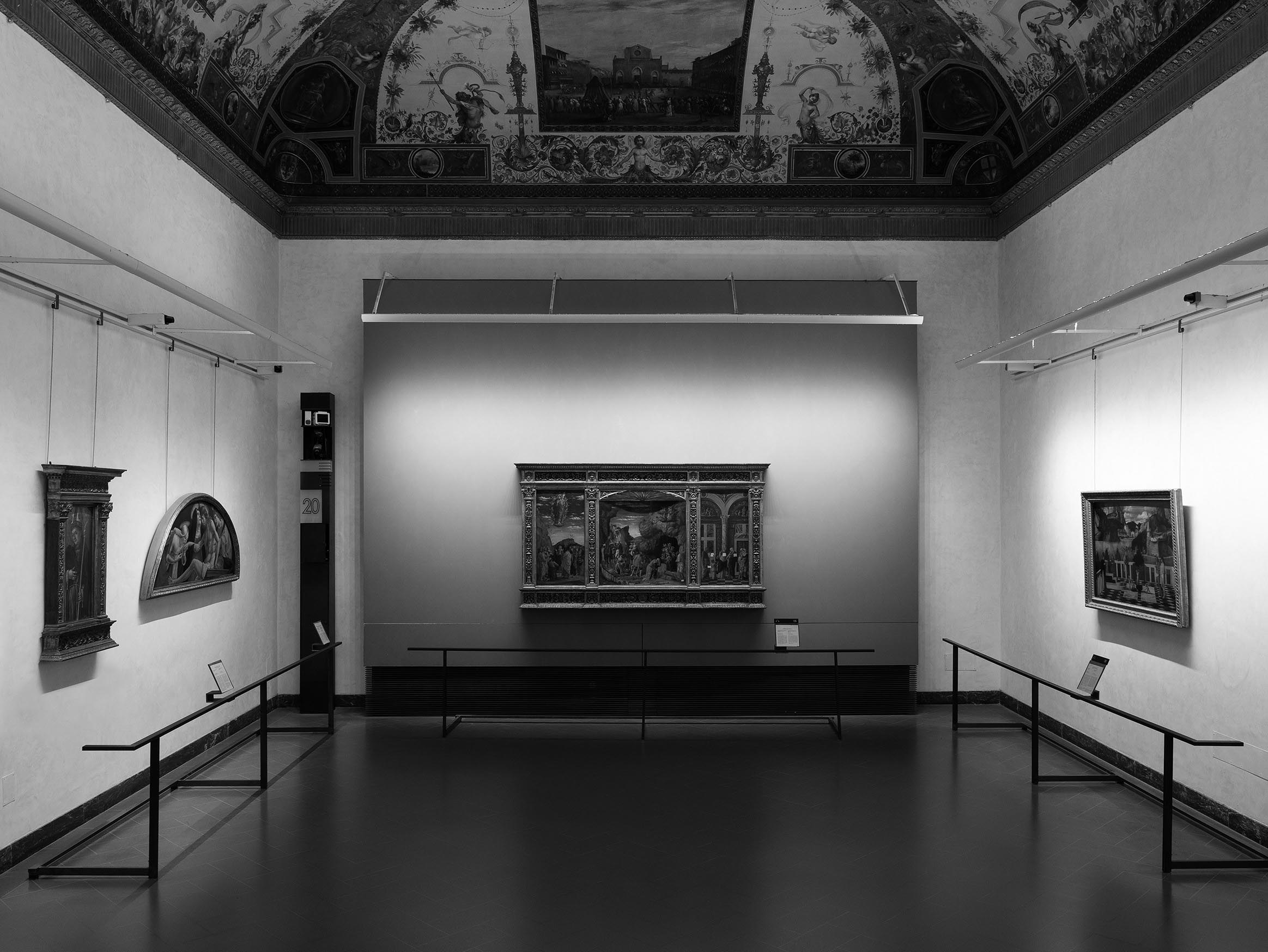
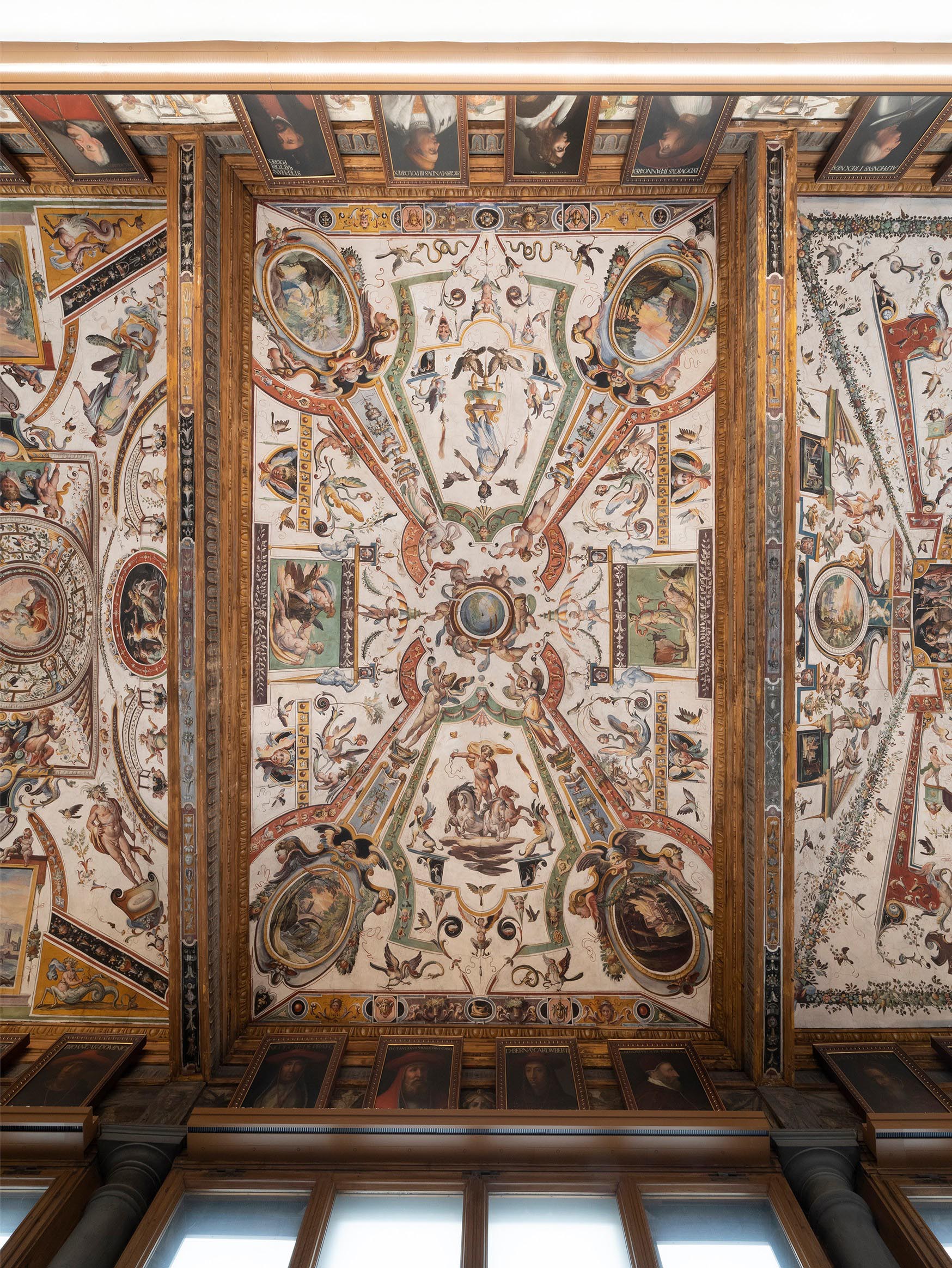
The partnership between Targetti, the Polo Museale Fiorentino (State Museums of Florence) and the Superintendence for Archaeology, Fine Arts and Landscape started in 2004 as part of the “New Uffizi” project; one of the most extensive of its kind in Europe in the museum field. This partnership was put into practice for the first time in 2012 with the project to light the Tribuna by the lighting designer Massimo Iarussi. This was an important project that marked the first step away from traditional lamps included in the project in 2004 to the use of LED. All the restoration work and the installation of new systems, including lighting, were carried out guaranteeing that all museum activities were not interrupted in any way along the process; to do this it was necessary to perform preliminary investigations, studies and forecasts of the effects on every possible aspect of the context involved in the project. In addition to the Statues located on the ground floor that underwent an extreme transformation, the most complex work was on the second floor, in particular in the main corridor and the rooms leading off the first corridor called di Levante. These are very different spaces with diverse characteristics: heights, ceilings and types of paintings. This is the reason the lighting for each room has different characteristics to ensure that each and every work of art can be seen and enjoyed with the greatest respect for their safeguard and protection. A careful check on the luminance values on the works from an accurate selection of luminous spectra of individual sources was carried out so as not to modify the colour of the works of art and reproduce them with absolute faithfulness.
The Thirteenth Century Room and Giotto
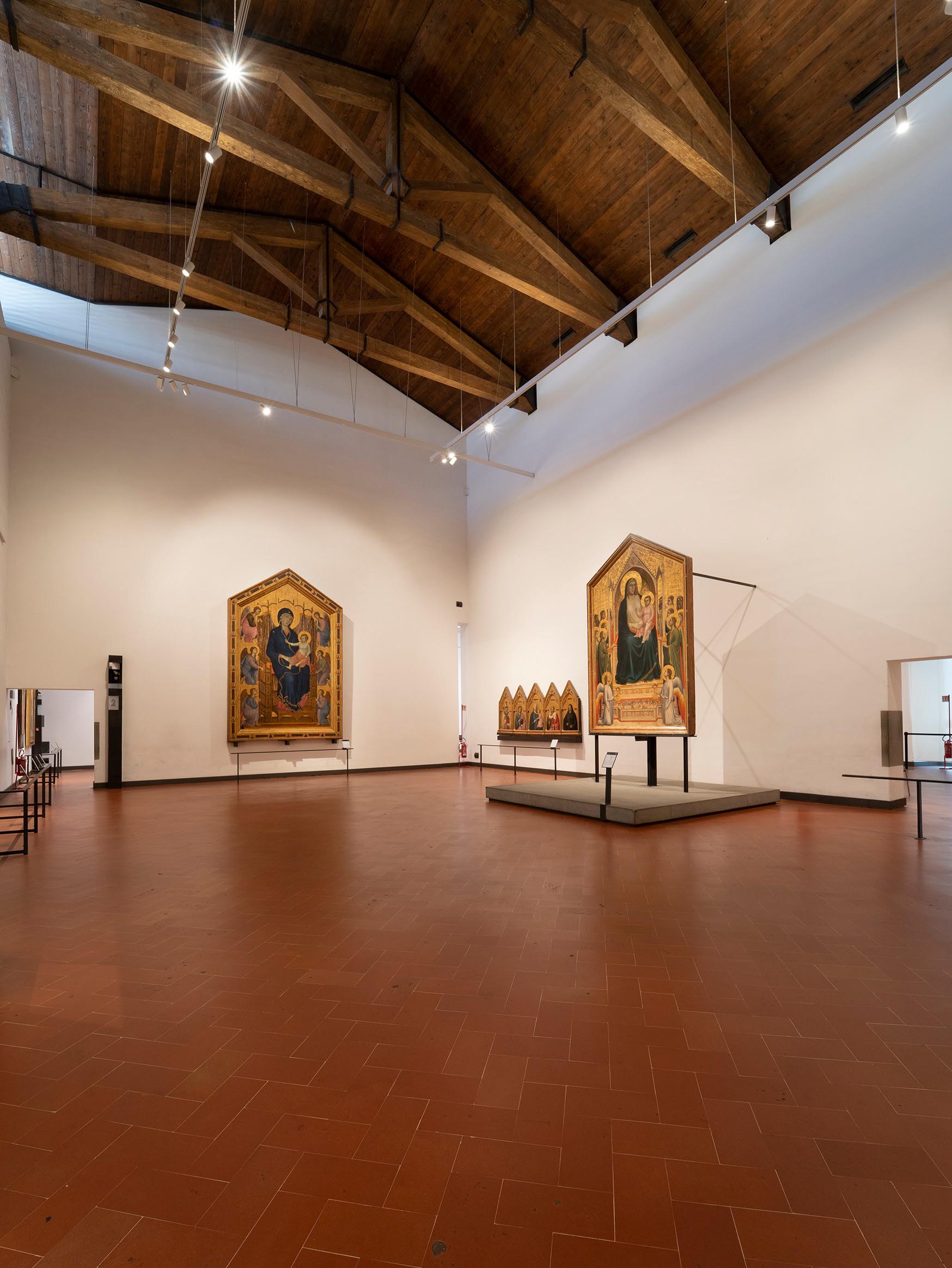
This room has an imposing wooden ceiling with exposed trusses. The lighting system focused on flexibility and lightness, is an H shaped metal profile that provides direct and indirect lighting. This suspension fixture is equipped on the upper part with linear sources to illuminate the ceiling and high colour rendering LEDO projec tors for the works of art. The projectors are fitted with differentiated optics accessorised with holographic filters to further soften the beams. The great installation height of the system combined with optical systems with high luminance control make it possible to enjoy the works on display from any observation point without the risk of glaring. The projectors are equipped with 3000K and Ra97 sources to ensure full appreciation and enhancement of the gold backgrounds that are characteristic of the paintings displayed in this room.