City: Pisa
Country: Italy
Photo: Ivan RossiLighting the Tower of Pisa. A complex project
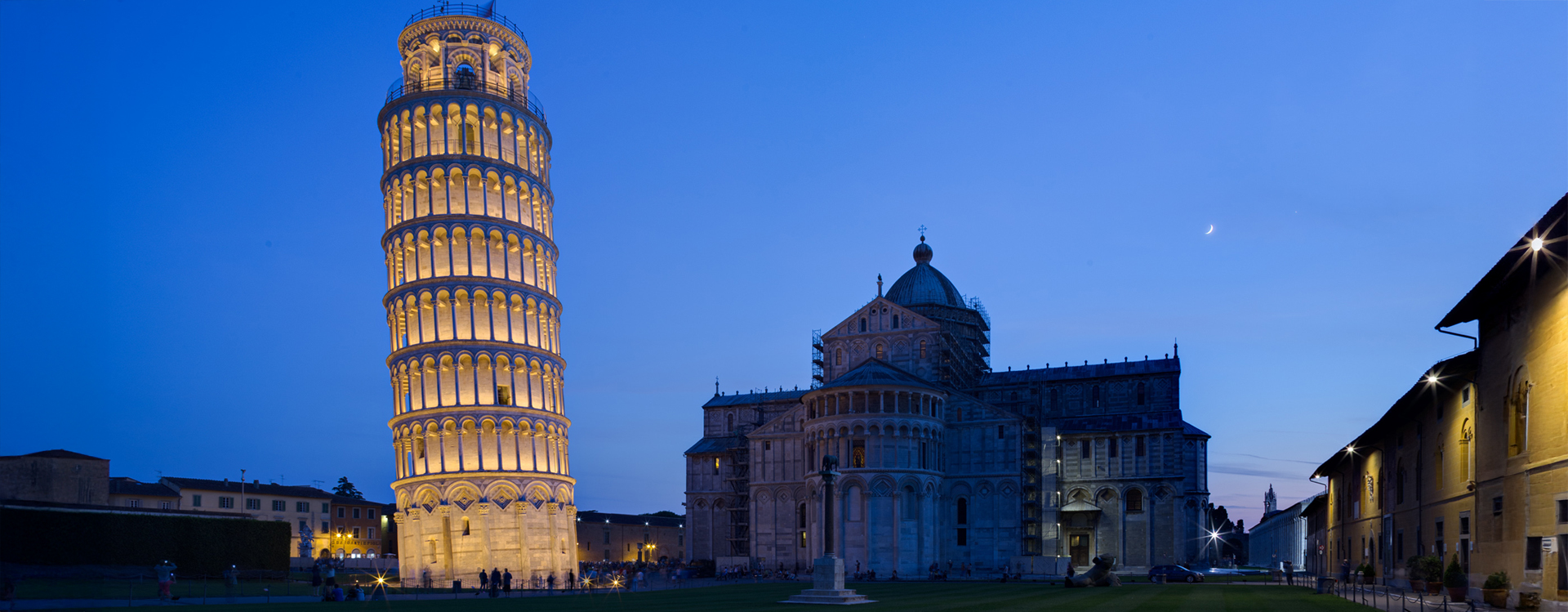
The Tower of Pisa, better known as the «leaning Tower», is the free-standing bell tower of the Cathedral of S. Maria Assunta, in the very famous Piazza del Duomo or Campo dei Miracoli. It is the symbol of the city and certainly one of Italy’s most iconic images.
The Tower is around 57 metres high and was built between the twelfth and fourteenth century AD. It has a series of blind arches and six floors of loggias, for a total of 8 floors. The inclination of approximately 4 degrees, is due to subsidence of the underlying land which was already visible in the early stages of construction.
Lighting such an important monument was a complex project which was developed over the course of almost 6 years.
The lighting visible today is the result of numerous tests and trials carried out in collaboration with Opera della Primaziale Pisana, the Soprintendenza per i beni architettonici, paesaggistici e monumentali (Superintendence for architectural, landscaping and monumental assets) and the Delegazione Pisana with the aim of creating an optimal effect and colour temperature to fully enhance the sophisticated contrast of lightness and solidity of the famous monument.
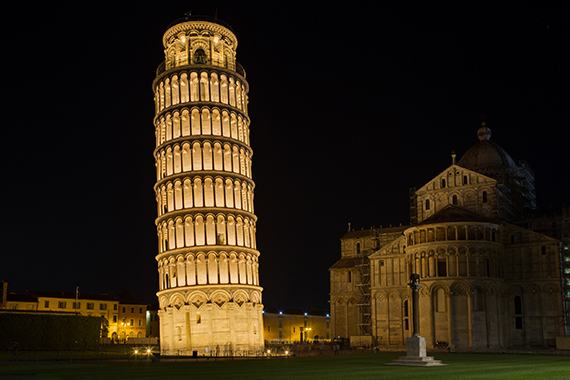
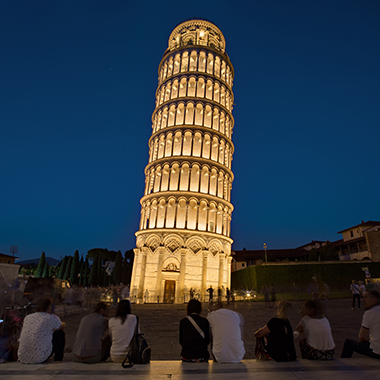
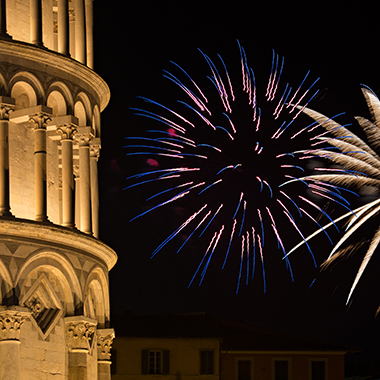
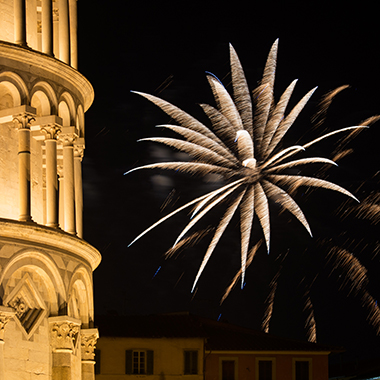
The transparency and three-dimensionality of the bell tower, the external mouldings, the contrast between solids and shadows of the belltower during the day are also highlighted at night thanks to the new lighting by Targetti.
Specially designed linear LED fixtures were positioned on every level of the Tower to light from below to avoid any masonry work and adapt perfectly to the different gallery sizes, thanks to the swivel joints that connect the devices together. From a lighting point of view, the linear fixtures light the vertical surfaces uniformly as well as the internal arches.
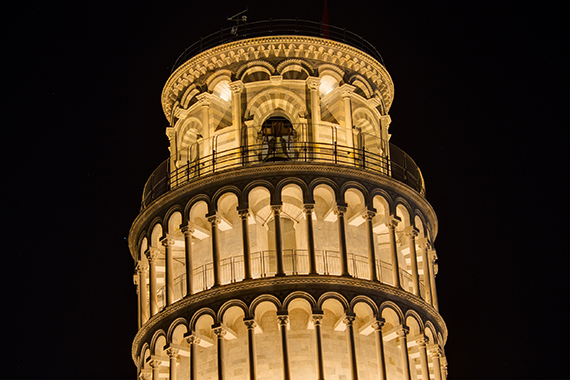
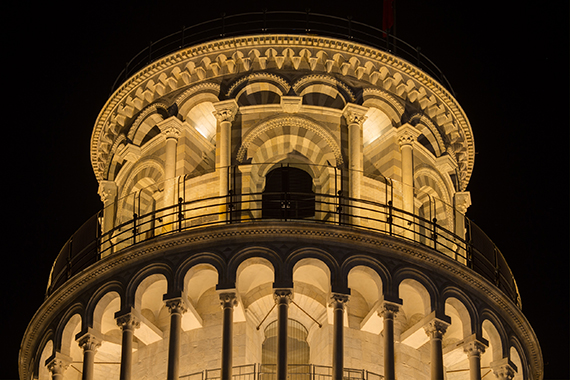
Customised fixtures from the STILO range equipped with Wall-Washer optics were chosen for the eighth Floor the belfry – and the semi dome to perfectly meet project needs.
Also in this case no masonry work was necessary: the fixtures were anchored directly to the uprights of the protective grills or the railing.
The fixtures used to light the semi dome were fitted with a hinge at the bottom making it possible to adjust the luminous flux and follow the tower, compensating for the lean with a uniform upward lighting effect.
Country: Italy
Photo: Ivan RossiLighting the Tower of Pisa. A complex project
The Tower of Pisa, better known as the «leaning Tower», is the free-standing bell tower of the Cathedral of S. Maria Assunta, in the very famous Piazza del Duomo or Campo dei Miracoli. It is the symbol of the city and certainly one of Italy’s most iconic images.
The Tower is around 57 metres high and was built between the twelfth and fourteenth century AD. It has a series of blind arches and six floors of loggias, for a total of 8 floors. The inclination of approximately 4 degrees, is due to subsidence of the underlying land which was already visible in the early stages of construction.
Lighting such an important monument was a complex project which was developed over the course of almost 6 years.
The lighting visible today is the result of numerous tests and trials carried out in collaboration with Opera della Primaziale Pisana, the Soprintendenza per i beni architettonici, paesaggistici e monumentali (Superintendence for architectural, landscaping and monumental assets) and the Delegazione Pisana with the aim of creating an optimal effect and colour temperature to fully enhance the sophisticated contrast of lightness and solidity of the famous monument.
The transparency and three-dimensionality of the bell tower, the external mouldings, the contrast between solids and shadows of the belltower during the day are also highlighted at night thanks to the new lighting by Targetti.
Specially designed linear LED fixtures were positioned on every level of the Tower to light from below to avoid any masonry work and adapt perfectly to the different gallery sizes, thanks to the swivel joints that connect the devices together. From a lighting point of view, the linear fixtures light the vertical surfaces uniformly as well as the internal arches.
Customised fixtures from the STILO range equipped with Wall-Washer optics were chosen for the eighth Floor the belfry – and the semi dome to perfectly meet project needs.
Also in this case no masonry work was necessary: the fixtures were anchored directly to the uprights of the protective grills or the railing.
The fixtures used to light the semi dome were fitted with a hinge at the bottom making it possible to adjust the luminous flux and follow the tower, compensating for the lean with a uniform upward lighting effect.
Other projects in the same category